Tax Law News

E
ET Legal 6d ago · 1 min read
Parliamentary panel flags compliance glitches on new income tax act, seeks more data from CBDT
Corporate & Commercial Tax Law

Parliamentary panel flags compliance glitches on new income tax act, seeks more data from CBDT

A parliamentary committee has identified compliance issues with the new Income Tax Act. They are seeking detailed data from the CBDT on its overall impact. The committee wants to understand changes in taxpayer numbers and revenue collection. Technology-driven tax processes and faceless decisions also presented certain challenges. Further discussions are planned with tax authorities to address these concerns.

Save
L
LiveLaw 02 Sep 2026 · 1 min read
Mineral Rights, Mineral Wrongs: Centre's Overreach On Mineral Taxation
Tax Law

Mineral Rights, Mineral Wrongs: Centre's Overreach On Mineral Taxation

Save
L
LiveLaw 01 Sep 2026 · 1 min read
Retrospective Sales Tax Liability: Revenue To State versus Reasonableness.
Tax Law

Retrospective Sales Tax Liability: Revenue To State versus Reasonableness.

Save
L
LiveLaw 01 Sep 2026 · 1 min read
Mere Delay In Depositing Foreign Travel Tax Not Same As 'Failure To Pay' : Supreme Court Sets Aside Penalty On Saudi Airlines
Supreme Court Tax Law

Mere Delay In Depositing Foreign Travel Tax Not Same As 'Failure To Pay' : Supreme Court Sets Aside Penalty On Saudi Airlines

Save
L
LiveLaw 26 Aug 2026 · 1 min read
Senior Associate (Tax) Vacancy At Ernst & Young [Mumbai; Apply Now]
Tax Law Technology, AI & Data Privacy

Senior Associate (Tax) Vacancy At Ernst & Young [Mumbai; Apply Now]

Ernst & Young invites online applications for the post of Senior Associate (Tax). Name of the Post: Senior Associate (Tax) Location: Mumbai Essential Qualification and Experience ·�Candidate should have a degree in CA or LL.B. with 7 to 12 years of post-qualification experience. Roles & Responsibilities · Litigation Support: Represent clients and assist senior counsels before judicial authorities, tribunals, and high courts. · Legal Drafting: Draft writ petitions, legal replies, appeals, and comprehensive opinions on complex tax issues. · Advisory Services: Counsel corporate clients on indirect tax implications for business operations, transactions, and supply chains. · Legal Research: Research case laws, statutory provisions, and notifications under GST, Customs, and historical indirect tax frameworks. How to apply? ·�To apply online, click here To Access Official Notification, click here

Save
L
LiveLaw 26 Aug 2026 · 1 min read
Associate (Tax) Vacancy At Ernst & Young [Mumbai; Apply Now]
Tax Law Technology, AI & Data Privacy

Associate (Tax) Vacancy At Ernst & Young [Mumbai; Apply Now]

Ernst & Young invites online applications for the post of Associate (Tax). Name of the Post: Associate (Tax) Location: Mumbai Essential Qualification and Experience Candidate should have a degree in LL.B., LLM, CA with 2 years of experience. How to apply? To apply online, click here To Access Official Notification, click here

Save
L
LiveLaw 26 Aug 2026 · 2 min read
S. 74 CGST Act | General Allegations Of Fraud/Suppression Won't Extend Limitation; SCN Must Specify Foundational Facts : Supreme Court
Supreme Court Tax Law

S. 74 CGST Act | General Allegations Of Fraud/Suppression Won't Extend Limitation; SCN Must Specify Foundational Facts : Supreme Court

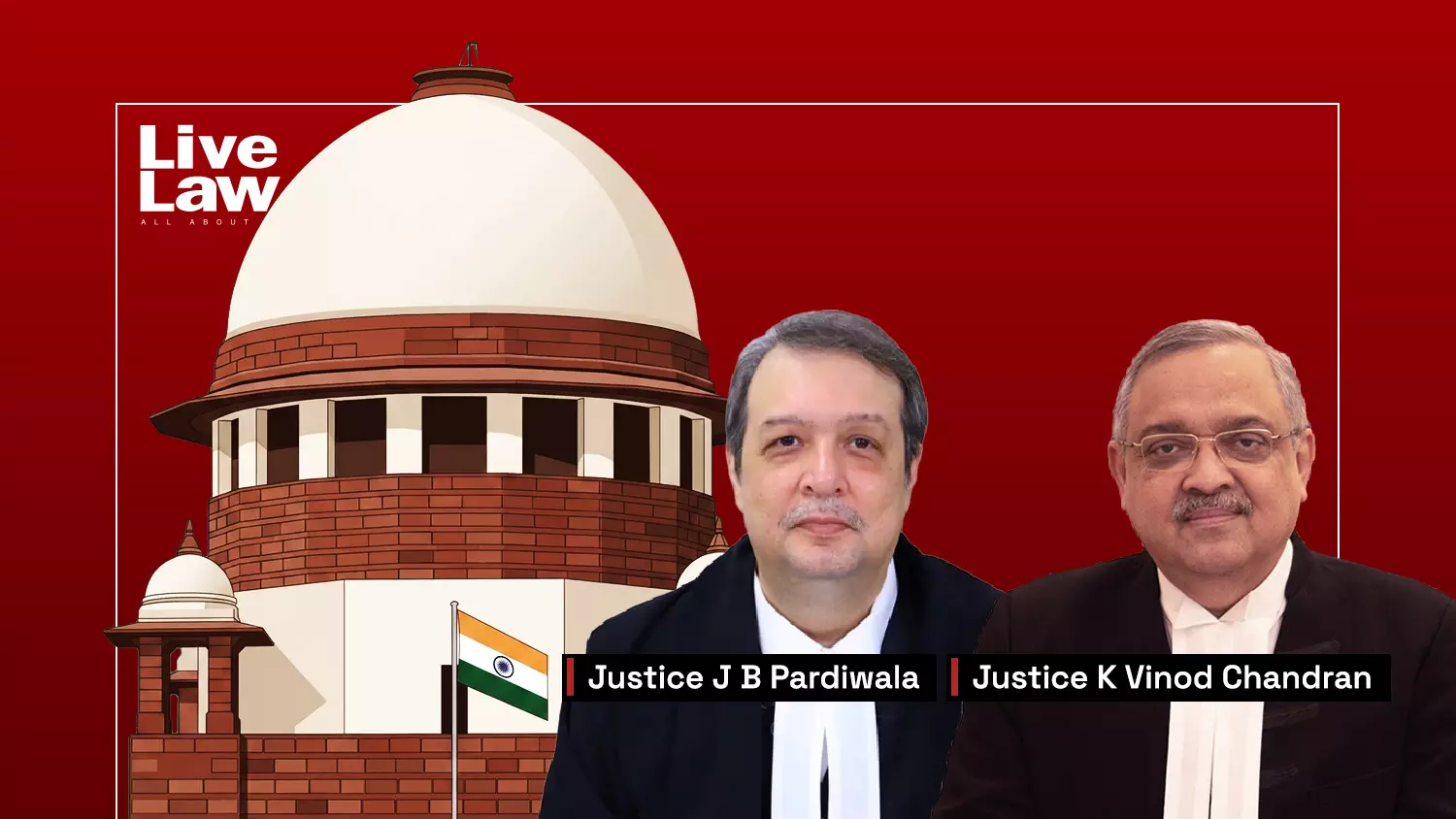
The Supreme Court on Tuesday (August 25) quashed the GST show-cause notice issued to Tata Steel Ltd. under Section 74 of the Central Goods and Services Tax Act, 2017, for alleged short payment of tax due to suppression of facts. A bench of Justice JB Pardiwala and Justice K Vinod Chandran called the department's invocation of Section 74 of the Act, rather than the ordinary mechanism under Section 73, to be bad in law just to seek an extension of the limitation period by using expressions such as “fraud,” “willful misstatement” or “suppression of facts”. The Court said that where the Department seeks to proceed against an assessee under Section 74, the foundational facts establishing how the alleged tax short payment or wrongful availment of input tax credit resulted from fraud, willful misstatement or suppression must be set out in the show cause notice itself. “It is not mere lip service to the provisions that is intended when an extended limitation period is provided for recovering an excess benefit availed, short payment or excess refund, from the assessee, especially when the allegation is of fraud/willful misrepresentation/suppression. The foundational facts which led to the inference arrived at of fraud/willful misrepresentation/ suppression should be evident from the notice itself. The mere employment of such words will not indicate an application of mind, upon which alone the satisfaction can be arrived at. The words are not to be mechanically recited in the notice to enable recovery outside the normal limitation provided under the statute.”, the court observed. The proceedings against Tata Steel concerned alleged irregularities relating to input tax credit (ITC) for three financial years. The Department sought to invoke Section 74, rather than the ordinary mechanism under Section 73, thereby relying on the extended limitation applicable where the alleged non-payment or short payment of tax, or wrongful availment/utilisation of ITC, is “by reason of fraud, o

Save
I
India Today Law Today 25 Aug 2026 · 1 min read
Bombay High Court to re-hear Volkswagen's $1.4 billion tax case after 1.5 years
High Courts Tax Law

Bombay High Court to re-hear Volkswagen's $1.4 billion tax case after 1.5 years

Bombay High Court to re-hear Volkswagen's $1.4 billion tax case after 1.5 years

Save
L
LiveLaw 25 Aug 2026 · 1 min read
Looking For More Tax Law Updates?
Insolvency & Bankruptcy Tax Law

Looking For More Tax Law Updates?

LiveLawBiz is LiveLaw's dedicated platform for tax and regulatory laws. If you follow developments in direct tax, indirect tax (GST), customs, tax litigation or regulatory matters, we invite you to visit LiveLawBiz for more specialised and comprehensive coverage. LiveLawBiz brings you: - • IPR • Corporate Law • Competition Law • RERA • IBC While selected major tax developments will continue to appear on LiveLaw, more detailed and regular coverage is now available on LiveLawBiz. Stay ahead of developments that matter to business and practice. If you feel any important judgment or legal development with regard to Tax Law should be reported, please notify us at: info@livelaw.in & sahyaja@livelawbiz.com. Visit LiveLawBiz for the latest tax and regulatory law updates.

Save
L
LiveLaw 25 Aug 2026 · 1 min read
Looking For More IPR Updates?
Intellectual Property Tax Law

Looking For More IPR Updates?

LiveLawBiz is LiveLaw's dedicated platform for intellectual property law & other commercial laws. If you follow developments in patents, trademarks, copyrights, designs or related matters, we invite you to visit LiveLawBiz for more specialised and comprehensive coverage. LiveLawBiz brings you: - • IBC • GST/VAT/CST • Competition Law • RERA • Arbitration • Tax While selected major IPR developments will continue to appear on LiveLaw, more detailed and regular coverage is now available on LiveLawBiz. Stay ahead of developments that matter to business and practice. If you feel any important judgment or legal development with regard to IPR should be reported, please notify us at: info@livelaw.in & sahyaja@livelawbiz.com. Visit LiveLawBiz for the latest IPR law updates.

Save
L
LiveLaw 24 Aug 2026 · 2 min read
AI-Generated Case Laws In Tax Order: Gujarat High Court Directs Strict Verification And Human Oversight, Warns Of Contempt
High Courts Tax Law

AI-Generated Case Laws In Tax Order: Gujarat High Court Directs Strict Verification And Human Oversight, Warns Of Contempt

The Gujarat High Court quashed a GST cancellation order as well as appellate proceedings against an entity after noting that the State Tax Officer had passed the order relying exclusively on AI-generated case laws, including non-existent and irrelevant authorities.� A division bench of Justice AS Supehia and Justice Vaibhavi D Nanavati had in its earlier ordered said that it appeared that the Officer's order was passed by placing "reliance exclusively on the AI generated case laws". The court had then asked the State to get instructions.� On August 20 the counsel for the State submitted the Affidavit-in-reply of respondent no.1 State Tax Officer, who was personally present before the Court. The counsel also tendered the communication dated 19/08/2026 written by the Deputy State Tax Commissioner and also the administrative instructions issued by the Office of the Additional Commissioner of State Tax dated 18/08/2026.� The officer tendered an unconditional apology for citing the AI-generated judgments and stated in the affidavit-in reply that he is a probationary officer and due to his lack of experience, mistake had happened and he has tendered unconditional apology to the Court for using the Artificial Intelligence (AI) in drafting the order and referring to the nonexistent and irrelevant judgments. He also submitted that, after the order passed by this Court, he attended a training programme, "usage of Artificial Intelligence (AI) in Drafting SCA and adjudication/appellate order".� The State submitted that�respondents intend to revise the entire orders which are impugned in the petition by resorting to the provision of Section 108 of the Goods and Services Tax Act. It said that a fresh order will be passed and if the court think appropriate all the orders may be set aside and the Department will issue fresh show cause notice to the petitioner. "We appreciate the fair stance taken by the respondents in the present matter and also the issuance of the instructions, in

Save
L
LiveLaw 19 Aug 2026 · 1 min read
2026 LiveLaw (SC) 833 |  M/S TVS MOTOR COMPANY LIMITED Versus COMMISSIONER OF CENTRAL EXCISE, CHENNAI-III
Supreme Court Tax Law

2026 LiveLaw (SC) 833 | M/S TVS MOTOR COMPANY LIMITED Versus COMMISSIONER OF CENTRAL EXCISE, CHENNAI-III

Referral Charges Received By Auto Dealers For Bank & Insurance Promotion Subject To Service Tax : Supreme Court �

Save
L
LiveLaw 19 Aug 2026 · 2 min read
Referral Charges Received By Auto Dealers For Bank & Insurance Promotion Subject To Service Tax : Supreme Court
Supreme Court Tax Law

Referral Charges Received By Auto Dealers For Bank & Insurance Promotion Subject To Service Tax : Supreme Court

The Supreme Court on Wednesday (August 19) held that the referral charges received by automobile dealers from banks and insurance companies for facilitating vehicle loans and insurance policies are taxable as “Business Auxiliary Service” under the Finance Act, 1994. “The assessee is promoting the business of the banks and the insurance company for which they receive an amount as stipulated in the agreement.”, observed a bench of Justice J.B. Pardiwala and Justice K. Vinod Chandran. TVS Motor Company Ltd., a dealer in automobiles, received 'referral charges' from banks (HDFC Bank & ICICI Bank) and insurance companies (Oriental Insurance Company) for referring customers who availed motor vehicle loans and took out insurance policies through the dealer's facilitation. The Department sought to tax these referral charges as "Business Auxiliary Service" under Section 65(105)(zzb) of the Finance Act, 1994. The assessee contended that the charges were not taxable and that there was confusion regarding the taxability of such services. The assessee deposited the entire tax liability prior to the issuance of the show cause notice, however disputed the show cause notice issued on April 2, 2008, after the entire tax liability had already been discharged. The judgment authored by Justice Chandran affirmed the Tribunal's finding that the referral charges are taxable as Business Auxiliary Service. The Court endorsed the Central, Excise and Services Tax Appellate Tribunal (“CESTAT”) decision in M/s. Pagaria Auto Center v. Commissioner of Central Excise, Aurangabad (2014), which held that referral charges received by automobile dealers for facilitating loans and insurance are taxable as Business Auxiliary Service. However, the Court set aside the penalty under Section 78 of the Finance Act, noting that the tax liability was satisfied before the show cause notice was issued, observing that there was "some confusion insofar as liability". “There was some confusion insofar as liability

Save
L
LiveLaw 19 Aug 2026 · 1 min read
Associate (Tax) Vacancy At Ernst & Young [Apply Now; Mumbai]
Tax Law Technology, AI & Data Privacy

Associate (Tax) Vacancy At Ernst & Young [Apply Now; Mumbai]

Ernst & Young invites online application for the post of Associate (Tax). Name of the Post: Associate (Tax) Location: Mumbai Essential Qualification and Experience Degree in LL.B. and CA with Frontend Development (2+ years) Solid understanding of indirect tax regulations requirements applicable in national contexts. Experience in managing indirect tax litigation processes, including preparing necessary documentation and representation. Proficient in analyzing complex tax matters and recommending effective strategies to mitigate risks. Ability to conduct thorough research on indirect tax legislation to support client advisory services. Demonstrated capability in collaborating with cross-functional teams to deliver tax solutions in consulting settings. How to apply? To apply online, click here To Access Official Notification, click here

Save
L
LiveLaw 14 Aug 2026 · 2 min read
Income Tax Act | 18-Month Period To Decide Settlement Application Under S.245D(4A) Is Mandatory, Not Directory: Allahabad High Court
High Courts Tax Law

Income Tax Act | 18-Month Period To Decide Settlement Application Under S.245D(4A) Is Mandatory, Not Directory: Allahabad High Court

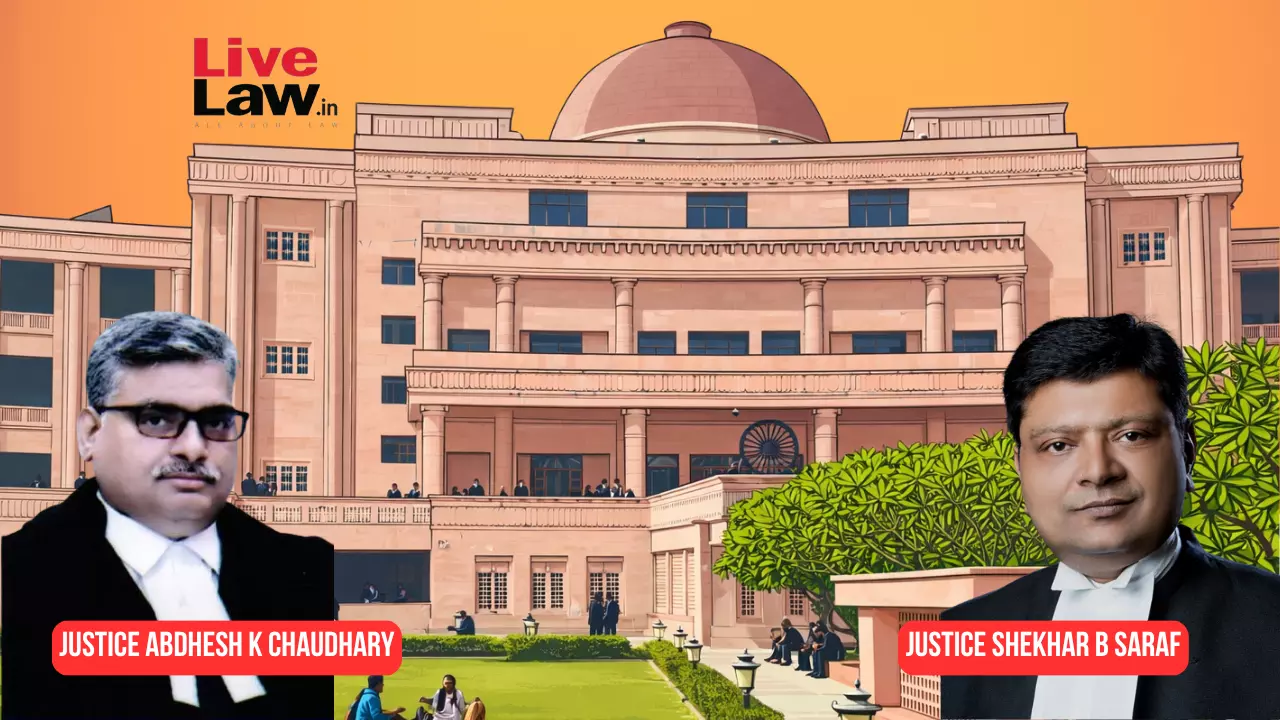
The Allahabad High Court at Lucknow has held that the period of 18 months prescribed under Section 245D(4A)(iii) of the Income Tax Act, 1961 for disposal of a settlement application is mandatory and not directory in nature. It quashed an order of the Interim Board for Settlement passed after that period had expired. Section 245D(4A)(iii) of the Income Tax Act requires an order under Section 245D(4) to be passed within eighteen months from the end of the month in which the application was made, in respect of applications made on or after June 1, 2010. Quashing an order of the Interim Board for Settlement passed after that period had expired, the bench of Justice Shekhar B. Saraf and Justice Abdhesh Kumar Chaudhary held “the period precribed under Section 245D(4A)(iii) for disposing the settlement application is mandatory and such period commences when the petitioners application first stood allotted to and was acted upon by IBS-III, Delhi.” A search and seizure was conducted on October 4, 2018 under Section 132 of the Act at the premises of B.L. Agro Industries Limited, followed by notices under Sections 153A and 143(2). The company's settlement application, filed on 23rd March 2021 pursuant to liberty granted by the High Court after the Income Tax Settlement Commission was abolished by the Finance Act, 2021, was treated as a pending application under Section 245A(eb) and allotted to the Interim Board for Settlement-III, Delhi. The Central Board of Direct Taxes transferred it to the Interim Board for Settlement-VII, Chennai by order dated June 13, 2022. The Chennai Board rejected the settlement application by order dated 30th October 2023 under Section 245D(4), and dismissed rectification applications on 15th December 2023 without adjudicating the objection that the order was barred by limitation. Both orders were challenged before the High Court under Article 226. It was argued for the petitioner that the eighteen-month period was mandatory and could not be diluted

Save
E
ET Legal 13 Aug 2026 · 1 min read
Supplier tax default should not hurt genuine businesses: Industry body
Supreme Court Tax Law

Supplier tax default should not hurt genuine businesses: Industry body

The Federation of Indian Micro and Small & Medium Enterprises (FISME) on Thursday urged Finance Ministry and GST Council to introduce legislative safeguards to protect bona fide taxpayers following the Supreme Court's recent judgment that made supplier tax payment mandatory for Input Tax Credit (ITC).

Save
L
LiveLaw 13 Aug 2026 · 2 min read
Parliament Passes Law Curbing States' Power To Levy Tax On Minerals & Recover Past Dues
Tax Law Regulatory & Public Policy

Parliament Passes Law Curbing States' Power To Levy Tax On Minerals & Recover Past Dues

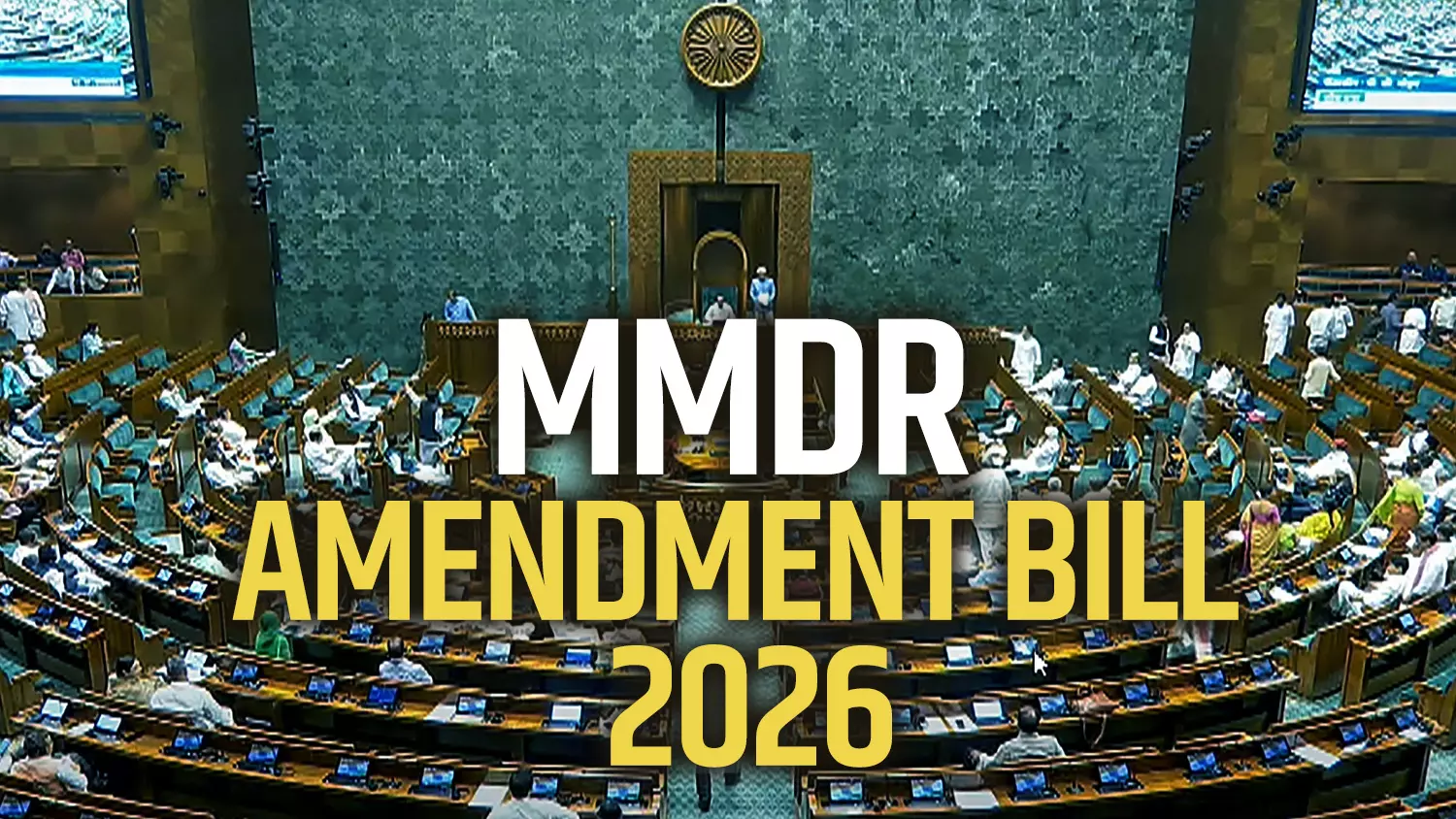
The�Parliament has passed an amendment curbing the power of State Governments to impose taxes, cess and other levies on mineral rights and mineral-bearing lands, paving the way for a more uniform fiscal regime for the mining sector. The Rajya Sabha today cleared the Mines and Minerals (Development and Regulation) Amendment Bill, 2026, which was passed by the Lok Sabha yesterday. A key provision of the Bill is the insertion of a new Section 9D, under which States cannot impose taxes, cess or other levies on mineral rights or mineral-bearing lands based on mineral quantity, mineral value, royalty payable or otherwise, except in accordance with conditions or restrictions prescribed by the Centre. The law also seeks to invalidate the levies imposed by States before the commencement of 2026 amendment, which have not been deposited or recovered. However, taxes, cess or other levies that had already been deposited with or recovered by a State Government will not have to be refunded. Notably, in 2024, a 9-judge bench of the Supreme Court had declared that the States have the power to levy tax on mineral rights and that the Union law - Mines and Minerals (Development and Regulation) Act 1957 - does not limit such power of the States. The Court also rejected the Union's request to give only a prospective effect for the ruling, and allowed the States to cover past dues dating back till April 1, 2005. In the statement of objects and reasons of the Bill, the Centre argued that differing State-level taxes and levies have created uncertainty for the mining industry, including through multiple charges, unpredictable taxation, varying rates and retrospective levies. According to the statement of objects and reasons, excessive and unpredictable fiscal burdens can make mining operations commercially unviable, discourage mineral extraction and increase the cost of goods and services. The government says the amendments are intended to provide certainty, stability and predictability to t


Save
L
LiveLaw 12 Aug 2026 · 2 min read
No Motor Vehicle Tax On Vehicle Rendered Unroadworthy After Accident, Even If Owner Failed To Intimate Authorities: Kerala High Court
High Courts Tax Law

No Motor Vehicle Tax On Vehicle Rendered Unroadworthy After Accident, Even If Owner Failed To Intimate Authorities: Kerala High Court

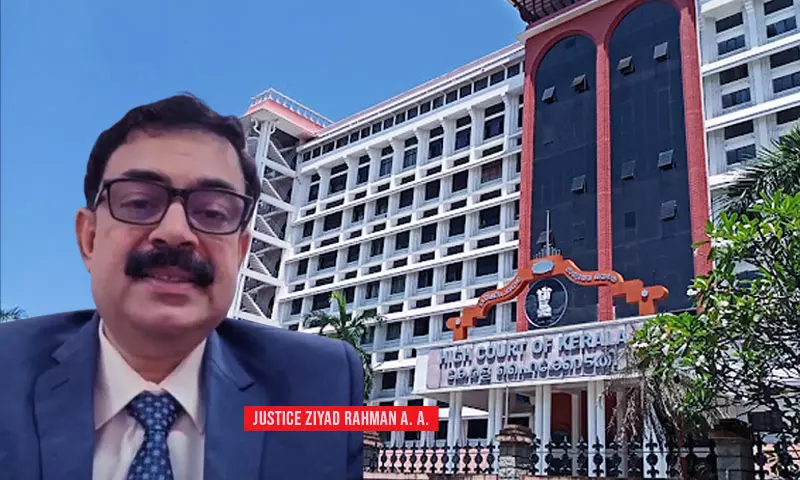
The Kerala High Court has held that motor vehicle tax cannot be imposed for a period during which a vehicle was neither used nor kept for use on the road because it had become completely unroadworthy, even if the registered owner failed to submit the prescribed advance intimation in 'G Form' under Kerala Motor Taxation Rules.� Justice Ziyad Rahman A.A., was delivering the judgment in a writ petition filed by a carriage owner whose vehicle became unfit to use in road pursuant to a road accident. The brief facts of the case is that the vehicle of the petitioner was involved in an accident with a KSRTC bus on September 16, 2017 and suffered damage so severe that it became completely unfit for road use. Despite the accident, the authorities subsequently demanded ₹10,93,150 towards motor vehicle tax arrears from April 1, 2018 onwards. Revenue recovery proceedings were also initiated in April 2025. The petitioner claimed that immediately after the accident, he had submitted a representation before the Regional Transport Officer, Thrissur, about the accident and also requesting for exemption from the tax. The State contended that the petitioner had not established that his representations seeking exemption had been received by the RTO. It was also argued that the petitioner had failed to comply with the requirement of submitting the prescribed 'G Form' in advance. The Court, noted that the FIR prima facie indicated that the vehicle had suffered serious damage and that the vehicle appeared to be in an abandoned condition. The Court went on to examine the liability to pay the tax under the Kerala Motor Taxation Act and noted that Section 3(1) of the Act contemplates that tax shall be levied on every motor vehicle used or kept for use in the State. The Court thus observed that in cases where it is possible for the registered owner of the vehicle to demonstrate that, the vehicle was completely unfit and beyond repair for using it on the road as on the date, consequent to an ac

Save
L
LiveLaw 12 Aug 2026 · 2 min read
Can States Impose Additional Levy On Sales Tax? Supreme Court 7-Judge Bench To Hear On September 22
Supreme Court Tax Law

Can States Impose Additional Levy On Sales Tax? Supreme Court 7-Judge Bench To Hear On September 22

The Supreme Court will, from September 22, hear a long-pending dispute concerning the constitutional power of State legislatures to impose an additional levy on sales tax, with a seven-judge Constitution Bench set to examine the scope of the States' taxing powers under the Seventh Schedule. A bench comprising Chief Justice of India Surya Kant, Justice Joymalya Bagchi and Justice V Mohana posted the matter for hearing on September 22. The CJI stated that the 7-judge bench will commence the hearing at 2 PM, so that the hearings of other regular matters can be done during the forenoon session. The bench framed the issue in the case as follows - �"Whether the imposition of a surcharge/additional tax/levy/cess, which is calculated on the basis of validly levied sales tax, is beyond the competence of the State Legislature?" The matter arises from Arjun Flour Mills v. State of Odisha, a civil appeal pending before the Supreme Court since 1994. The case concerns the validity of Section 5A of the Odisha Sales Tax Act, 1947, which imposed an additional tax on dealers based on their annual turnover. The provision, inserted by an amendment in 1997, prescribed an additional tax of 10% for dealers with an annual turnover between ₹10 lakh and ₹1 crore and 15% where the turnover exceeded ₹1 crore. The challenge raises a constitutional question�whether a State legislature can impose an additional amount on sales tax when the levy is calculated with reference to the dealer's annual turnover, a measure of taxation that may fall within the Union's legislative domain. Under Article 246 of the Constitution, legislative powers are divided between Parliament and the State legislatures through the Union, State and Concurrent Lists in the Seventh Schedule. Entry 54 of the State List, as it stood at the relevant time, empowered States to impose taxes on the sale or purchase of goods, while Entry 82 of the Union List dealt with taxes on income other than agricultural income. The dispute has re

Save
L
LiveLaw 11 Aug 2026 · 2 min read
Delhi High Court Asks Supreme Court, High Court Judges To Share PAN Details Amid Dispute Over Taxability Of Judicial Allowance
High Courts Tax Law

Delhi High Court Asks Supreme Court, High Court Judges To Share PAN Details Amid Dispute Over Taxability Of Judicial Allowance

The Delhi High Court has directed Private Secretaries of Supreme Court and High Court judges who have filed their income tax returns under the new tax regime, pursuant to the Court's earlier interim order concerning the taxability of judicial allowances, to furnish details including their PAN and return particulars to the Income Tax Department. The division bench of Justices Dinesh Mehta and Rajneesh Kumar Gupta passed the direction while dealing with an application moved by the Income Tax Department seeking modification of the Court's earlier order dated July 22, 2026. Under the earlier order, the Court had directed that income tax returns filed by judges covered by the interim order “shall not be processed” pending consideration of the challenge concerning the tax treatment of judicial allowances. The Income Tax Department submitted that the direction created a procedural difficulty because income tax returns are processed electronically through computer-generated programming at the Centralised Processing Centre (CPC). The software, it was submitted, cannot identify whether a particular return belongs to a sitting High Court or Supreme Court judge. To address the issue, the Court directed Private Secretaries of judges who have already filed their returns under the new regime pursuant to the July 22 interim order to furnish the following details to the Income Tax Department by August 18: Name of the judge Assessment year Permanent Account Number (PAN) Date of filing of return Acknowledgment number of the return The Court directed the Department not to process the returns of judges in respect of whom such details are received. The Court further directed that if a judge now proposes to file a return or revised return under the new regime pursuant to the July 22 interim order, his or her Private Secretary may furnish the same details within 12 hours of filing the return. The Court further ordered that if returns of judges covered by its earlier and present orders have

Save
Open Original ↗