

Criminal Law
Consumer Law










Online marketplaces have fundamentally reshaped the way consumers purchase goods. Unlike conventional retail, consumers purchasing through e-commerce platforms cannot physically examine a product or its packaging before completing a transaction. Information displayed on the marketplace interface therefore becomes the primary basis on which consumers assess the product, including its origin, quality and suitability. Among these statutory disclosures, Country of Origin (COO) information assumes particular significance for imported goods, where such disclosure frequently influences consumer preferences and purchasing decisions. Beyond indicating the place of manufacture, COO information often shapes consumer perceptions regarding product quality, regulatory standards, ethical sourcing and support for domestic industry. In this case, the accuracy of such information becomes as important as its availability. DISCLOSURE WITHOUT VERIFICATION Recognising this growing significance, the Department of Consumer Affairs amended the Legal Metrology (Packaged Commodities) Rules, 2011 in 2026 by the Legal Metrology (Packaged Commodities) (Amendment) Rules, 2026; inserting Rule 6(10A). This recent amendment requires every e-commerce entity selling imported products to provide a searchable and sortable filter specifying the COO in its product listings. This position was subsequently modified by the Legal Metrology (Packaged Commodities) Second Amendment Rules, 2026, which substituted Rule 6(10A) and deferred its commencement until 1 July 2027. Read together with Rule 6(5)(d) of the Consumer Protection (E-Commerce) Rules, 2020, which obligates sellers on marketplace e-commerce entities to disclose COO information, and Rule 5(3)(e), which requires marketplace e-commerce entities to prominently display seller-furnished information, the amended framework seeks to ensure that consumers receive material origin-related information at the pre-purchase stage. Yet the effectiveness of this fra
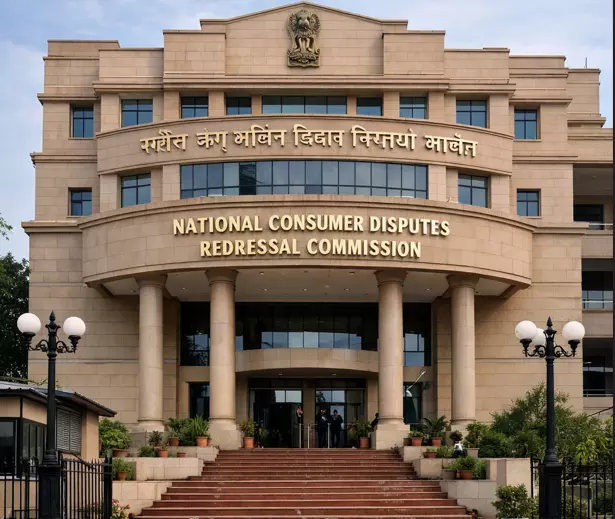
The National Consumer Disputes Redressal Commission (NCDRC), New Delhi, comprising President Justice A.P. Sahi and Member Shri Bharatkumar Pandya, has partly allowed a complaint filed by Tirupati Devi Cooperative Housing Society Ltd. against M/s Raja Construction Company & Ors., holding that handing over possession without obtaining the Occupation Certificate and carrying out construction beyond the sanctioned plan constituted a continuing deficiency in service. Facts: The complainant, Tirupati Devi Cooperative Housing Society Ltd., comprising 33 members occupying 25 flats in Balaji Apartments, Mumbai, entered into a redevelopment agreement with M/s Raja Construction Company on March 14, 2005. Under the agreement, the builder was required to demolish the existing buildings, construct new flats and provide them to the members free of cost. The builder handed over possession to the flat owners from 2008-09 onwards but allegedly failed to provide the sanctioned building plans and Occupation Certificate (OC). An RTI application subsequently revealed deviations from the sanctioned plans, including substantial additional construction. The Society consequently filed a consumer complaint in 2013, alleging deficiency in service and unfair trade practice, and sought compensation for delayed construction, variation in flat area, regularisation expenses and non-provision of the Occupation and Completion Certificates. Contentions of the builder: The builder denied the allegations and argued that the complaint was not maintainable, barred by limitation and involved excessive claims. It contended that the members had accepted possession of their flats and that any delay in obtaining the Occupation Certificate was attributable to alterations made by the members themselves. The builder also disputed the Society's right to maintain the complaint without impleading all members or obtaining the necessary permission. Observations and decision: The Commission observed that the builder ha

The District Consumer Disputes Redressal Commission, Kupwara, has allowed a complaint filed by a house owner against two contractors, a cement dealer and a cement manufacturer, holding that the construction work undertaken by the contractors was deficient and had caused damage to the complainant's residential house. The Commission relied on the findings of the R&B Department's technical assessment while granting relief to the complainant. Facts The complainant, Ghulam Mohidin Wani, owned land at Trehgam, Kupwara, where he planned to construct a residential house. After obtaining the required permission, OP Nos. 1 and 2 undertook the construction work and provided him a list of construction materials, including Arco-brand cement. The complainant purchased the cement from OP No. 3, Najjar Trading Company, manufactured/supplied by OP No. 4, Dawar Cements Pvt. Ltd. After completion of the construction, cracks developed in the building's slab, allegedly making the house unsafe for habitation. The complainant approached the opposite parties for redressal, but alleged that they failed to resolve the issue, leading him to file a consumer complaint alleging deficiency in service and unfair trade practice. During the proceedings, OP Nos. 1–3 failed to file their responses and were proceeded ex parte, while OP No. 4 denied the allegations and claimed that the cement was of standard quality. The R&B Department, Kupwara, inspected the house and assessed the damage at ₹4,04,943. Observation and Decision The Commission observed that OP Nos. 1 and 2, having undertaken the construction work, were responsible not only for execution of the work but also for ensuring the quality and standard of the materials used. The Commission found that the construction was deficient and that the complainant had suffered substantial damage to his house. It relied upon the R&B Department's technical report, which assessed the loss at ₹4,04,943. The Commission also noted that the opposite parties fail

The Rajasthan State Consumer Disputes Redressal Commission, Jaipur, comprising Ms. Urmila Verma, Member (Judicial), and Mr. Jai Gautam, Member, has allowed an appeal filed by Luis Casacuberta Abril against M/s Castle Mundota & Ors., holding that the complainant's application seeking to proceed on behalf of other wedding guests under Order I Rule 8 of the Code of Civil Procedure, 1908, ought to have been allowed. Facts The complainant, Luis Casacuberta Abril, had filed Consumer Complaint before the District Consumer Disputes Redressal Commission, Jaipur-III, against M/s Castle Mundota and Ors. The dispute arose from a wedding celebration that was initially scheduled for April 2020, later postponed to April 2021, and ultimately cancelled in February 2021 due to COVID-19 restrictions on social events and restrictions on the entry of foreign nationals into India. According to the complainant, there existed a commonality of interest between him and several wedding guests who had also made payments to the opposite parties. He sought refund of ₹10,03,000 and ₹40,000, along with interest at 18% per annum, and included in the complaint the names of the guests and the amounts paid by them. During the pendency of the complaint, the complainant filed an application under Order I Rule 8 CPC seeking to represent the other wedding guests in the proceedings. The District Consumer Commission rejected the application, following which the complainant preferred an appeal before the State Commission. Contentions of the Opposite Parties The opposite parties argued that the complainant had no authority to represent the wedding guests, that the guests had not independently claimed any refund, and that their claims were barred by limitation. They further challenged the maintainability of the representative proceedings. Observations and Decision The State Commission observed that the names of the wedding guests and the amounts paid by them had already been incorporated in the original compla
The Union Government's recent assurance that cases arising out of paper leak scandals would be tried through fast-track courts has understandably been welcomed by students and parents alike. Competitive examinations determine the future of millions of young Indians. When examination papers are leaked, the damage extends beyond a single recruitment process; it undermines public confidence in the integrity of institutions themselves. Those responsible deserve to be prosecuted, and they deserve to be prosecuted without undue delay. There is little disagreement on that objective. The real question, however, is whether announcing another fast-track court is enough to achieve it. India's legal history suggests that the answer is not as straightforward as governments often make it appear. Whenever a public issue attracts widespread attention, the institutional response is strikingly familiar. A special court is announced. A specialised tribunal is constituted. A dedicated forum is created. The expectation is that merely transferring a category of cases to a new institution will produce faster justice. The experience of the last three decades tells a different story. India does not suffer from a shortage of specialised forums. Consumer Commissions, Debt Recovery Tribunals, Commercial Courts, Family Courts and several categories of Special Courts were all created because ordinary courts were considered too slow for particular classes of disputes. Each of these institutions was established with a common legislative objective- to secure expeditious adjudication. Yet many of them today struggle with mounting pendency, judicial vacancies and administrative deficiencies that increasingly resemble those affecting ordinary courts. The difficulty, therefore, is not legislative design. Parliament has repeatedly enacted laws recognising the need for speedy adjudication. The Consumer Protection Act, 2019 prescribes strict timelines for deciding complaints. The Recovery of Debts and Ban

Rajiv Gandhi National University of Law (RGNUL), Punjab, was established by the State Legislature of Punjab by passing the Rajiv Gandhi National University of Law Punjab Act, (Punjab Act No. 12 of 2006). In May 2015, RGNUL was the first and only NLU to have been accredited by National Assessment and Accreditation Council ("NAAC") with an 'A' grade. In March 2018, RGNUL was amongst the four NLUs including NLU Delhi, NALSAR and NLUO to have been granted autonomy by the University Grants Commission. ABOUT CCCPL The Centre for Competition and Consumer Protection Law (CCCPL) is a research centre dedicated to advancing understanding and promoting awareness of competition and consumer protection laws. Driven by a committed academic and research community, the Centre seeks to ensure a fair and competitive marketplace through rigorous scholarship and informed policy engagement. Through research, advocacy, and outreach initiatives, it contributes to the development of sound legal frameworks that safeguard the interests of both consumers and businesses. ABOUT CALL FOR BLOGS CCCPL is presently organising a Call for Blogs, inviting submissions on contemporary and emerging issues in competition law and consumer protection, with the aim of fostering meaningful academic discourse and policy-oriented analysis. The initiative seeks to provide a platform for students, researchers, practitioners, academicians, and other stakeholders to engage critically with evolving legal, economic, and regulatory developments in these fields. ELIGIBILITY Submissions are invited from: • Academicians and Researchers • Legal Practitioners and Policy Professionals • Ph.D. Scholars • Postgraduate and Undergraduate Students THEME The authors may send submissions centered around contemporary and relevant issues of competition law and consumer protection. An illustrative and non-exhaustive list of themes is provided in the brochure for reference. Authors are encouraged to interpret the themes creatively and
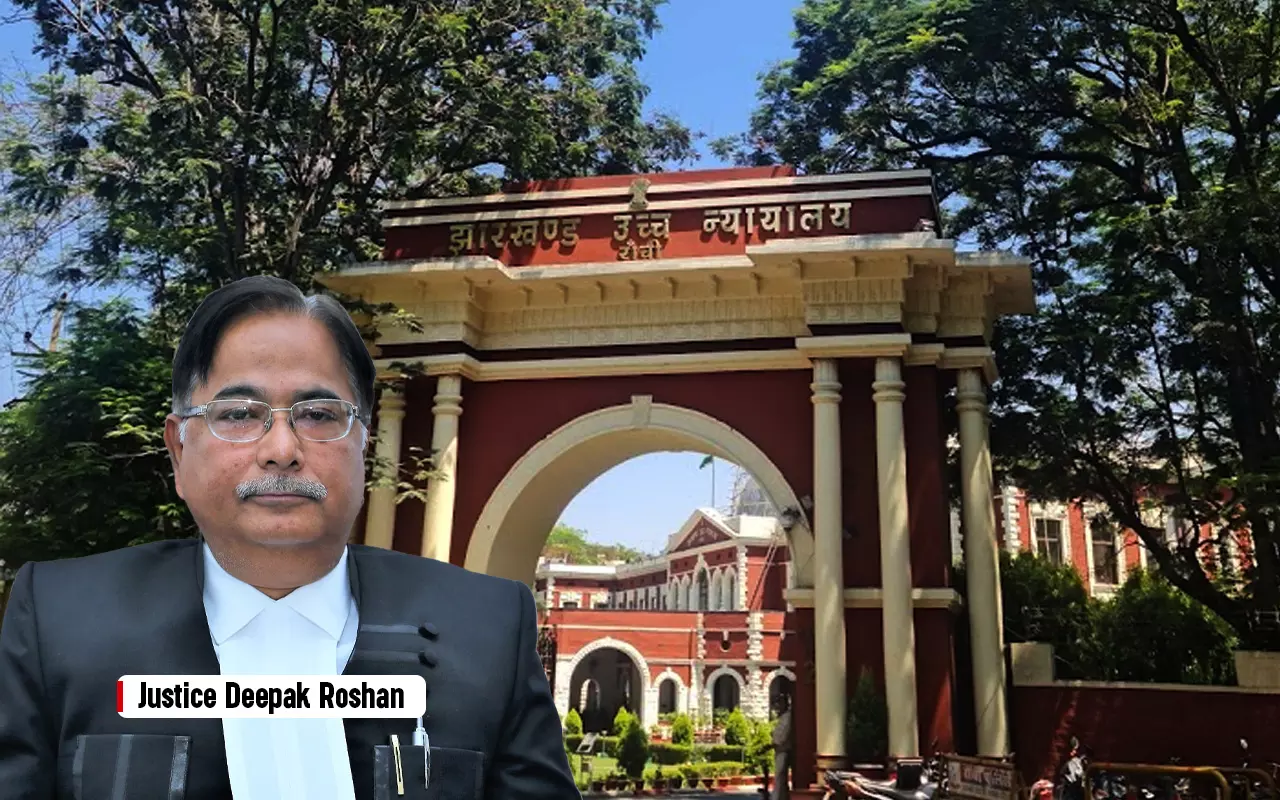
The Jharkhand High Court has modified a State Government notification which restricted the benefit of continuation in office under the Supreme Court's Manendra Bhaskar Limaye ruling to Presidents and Members of Consumer Commissions who retired on or after May 21, 2025. A Single Judge Bench of Justice Deepak Roshan held that the Supreme Court's directions did not restrict the benefit to office-holders who retired on or after the date of its judgment. The Court said May 21, 2025 was merely the date on which the judgment was pronounced and not a qualifying date for entitlement. The Court was hearing writ petitions filed by former Presidents and Members of District Consumer Disputes Redressal Commissions at Latehar, Jamtara, Simdega and Dumka. The petitioners had been appointed in 2021 for a tenure of four years or until attaining the age of 65 years, whichever was earlier. They retired between September 2024 and February 2025. The dispute arose after the State Government issued a notification dated October 10, 2025 pursuant to the Supreme Court's decision in Secretary, Ministry of Consumer Affairs v. Dr. Manendra Bhaskar Limaye (Limaye-II). The notification allowed Presidents and Members who had retired on or after May 21, 2025 to continue until completion of the fresh appointment process. Since the petitioners had retired before May 21, 2025, they were excluded from its benefit. The State argued that the Supreme Court's directions protected only those Presidents and Members who were still serving when Limaye-II was pronounced on May 21, 2025. It therefore contended that the petitioners, having already retired, could not seek reinstatement. The High Court disagreed. It said the relevant directions in Limaye-II did not create such a cut-off. The Court observed: “As a matter of fact, Paragraph 102(4) of Limaye-II nowhere confines the benefit of continuation to Office-holders who retired on or after the date of the judgment itself. Paragraph 102(3) of the directions which
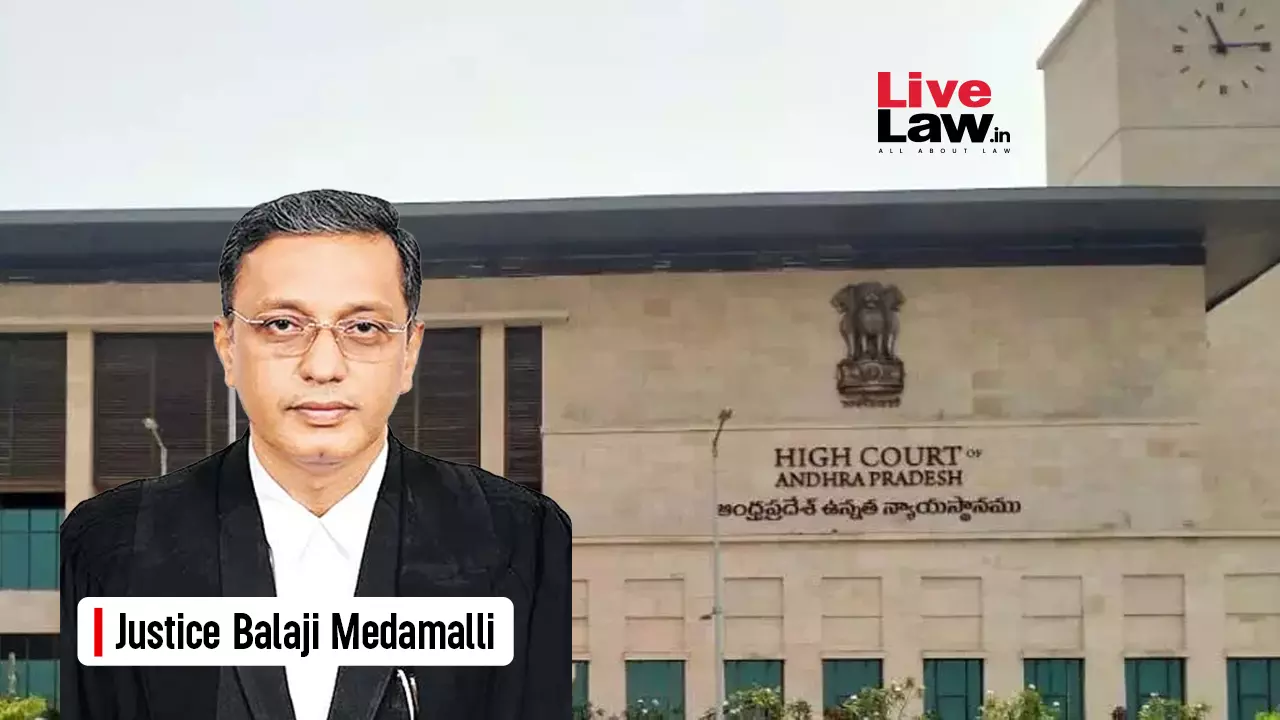
The Andhra Pradesh High Court has set aside an order appointing President of Vijayawada's District Consumer Disputes Redressal Commission, holding that the State Government cannot independently alter the order of merit or appoint a candidate of its choice by overlooking the recommendations of the Selection Committee. The case arose from a government order appointing the second-ranked candidate, arrayed as the fifth respondent, as President of the Commission, instead of the petitioner, who had topped the merit list. Justice Balaji Medamalli held that under Rule 6(11) of the Consumer Protection (Qualification for Appointment, Method of Recruitment, Procedure of Appointment, Term of Office, Resignation and Removal of the President and Members of the State Commission and District Commission) Rules, 2020, the State Government's role is confined to verifying the credentials and antecedents of the candidates recommended by the Selection Committee, and does not extend to altering the order of merit. “If the State Government finds some material against the candidate recommended in the order of merit, the only option left with it, is to bring the aforesaid material to the notice of the Selection Committee for taking appropriate action, instead of the State Government changing the list by itself,” the Court observed. Referring to the provisions governing the roles of the Selection Committee and the State Government under the Rules, the Court said that the committee is entrusted with the responsibility of assessing the suitability of the candidates and examining the relevant eligibility criteria. “ Once the Selection Committee has conducted such an assessment and forwarded the panel in the order of merit, the State Government cannot independently reassess the suitability of the candidates or make an appointment contrary to the recommendations of the Selection Committee,” the Court noted. The Court placed reliance on a Division Bench ruling of the Andhra Pradesh High Court in Sm

The J&K State Consumer Disputes Redressal Commission, Jammu, comprising President Smt. Nighat Sultana and Member Shri Maheep Gupta, has allowed a complaint filed against Acharya Institute of Technology & Ors., holding the Institute vicariously liable for the outstanding amount arising from the admission dispute. Facts: The complainants, Lakhinder Singh Sambyal and his son Dhananjay Singh, alleged that they had paid ₹2.80 lakh to Opposite Party No. 3 for securing Dhananjay's admission to Acharya Institute of Technology, Bengaluru, along with ₹10,000 as commission to Opposite Parties 2 and 3. They further paid ₹1,03,350 towards tuition fees and ₹25,000 towards hostel expenses to the Institute. Opposite Parties 2 and 3 allegedly failed to deposit the admission fee with the Institute. Consequently, the Institute expressed reluctance to allow Dhananjay to appear for his first-term examination, and he was compelled to withdraw from the Institute. With police intervention, the complainants recovered ₹2 lakh, leaving ₹90,000 outstanding. Of this, ₹10,000 was claimed against Opposite Party No. 2 and ₹80,000 against Opposite Party No. 3. The complainants sought recovery of the outstanding amount, reimbursement of fees and expenses, compensation for mental agony and harassment, and interest. The Commission had earlier partly allowed the complaint and directed Acharya Institute of Technology to pay ₹1,53,000 to the complainants towards tuition fees and compensation. The Institute accepted the award and deposited the amount. The complainants, however, challenged the earlier order before the J&K High Court, contending that their remaining claims, including the outstanding amount and interest, had not been adjudicated. The High Court permitted the complainants to withdraw the ₹1,53,000 deposited by the Institute and remanded the matter to the State Commission to decide the remaining claims after hearing the parties. The proceedings later resumed after the Commission was revived. I